A Century-Old Baker’s Stunning Signature Cake: The “Velvet Revelation”
Introduction
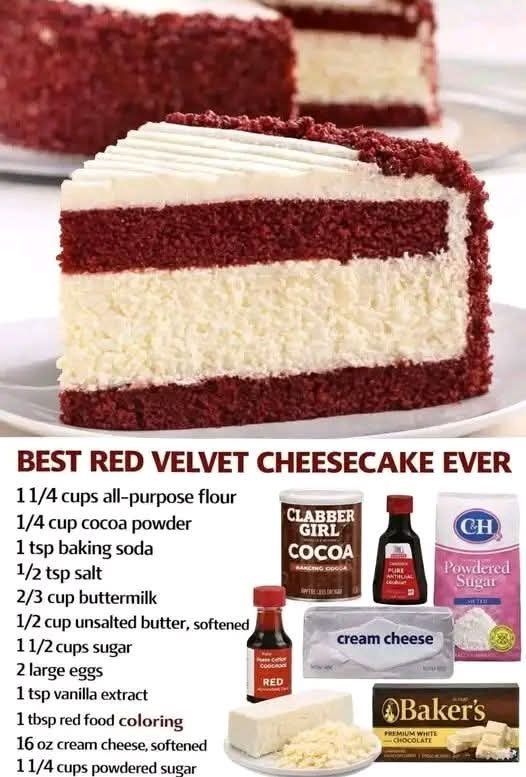
After a century of baking, I can confidently say this cake is a revelation. The “Velvet Revelation” cake combines timeless technique with sublime texture, creating what I believe to be the pinnacle of cake perfection. This isn’t just dessert—it’s an experience that has delighted generations.
Historical Context
This recipe evolved from early 20th-century velvet cakes, which originally referred to their fine, soft crumb rather than color. The original “velvet” cakes used cocoa’s natural red pigment and vinegar’s acidity to create tenderness. My version honors this tradition while incorporating a century of refined technique.
Formation Philosophy
The magic lies in balanced ratios: the precise emulsion of fat and liquid creates velvetiness, while the dual-leavening system ensures consistent rise. This cake exemplifies how simple ingredients, when treated respectfully, transform into something extraordinary.
Ingredients
For the Cake:
· 2½ cups (300g) cake flour, sifted · 1¾ cups (350g) granulated sugar · 1 tablespoon (15g) natural cocoa powder (not Dutch-processed) · 1 teaspoon (6g) fine sea salt · 1½ teaspoons (7g) baking soda · 1 teaspoon (5g) baking powder · 2 large eggs, room temperature · 1½ cups (360ml) vegetable oil · 1 cup (240ml) buttermilk, room temperature · 2 tablespoons (30ml) distilled white vinegar · 2 teaspoons (10ml) pure vanilla extract · 2 ounces (57g) red food coloring gel (or beet reduction for natural version) · 1 cup (240ml) hot strong brewed coffee
For the Ermine Frosting (Original Cooked Flour Frosting):
· 5 tablespoons (40g) all-purpose flour · 1 cup (240ml) whole milk · 1 cup (200g) granulated sugar · 1 cup (227g) unsalted butter, room temperature · 1 teaspoon (5ml) pure vanilla extract · ¼ teaspoon (1.5g) fine sea salt
Equipment
· Three 8-inch round cake pans · Parchment paper · Stand mixer with paddle attachment · Medium saucepan · Candy thermometer · Sifter · Cooling racks
Methods & Instructions
Part 1: The Cake Batter
Preparation: Preheat oven to 350°F (175°C). Grease three 8-inch round pans, line with parchment, and grease again. Sift cake flour once before measuring, then sift again with dry ingredients.
Dry Integration: In a large bowl, whisk together sifted cake flour, sugar, cocoa powder, salt, baking soda, and baking powder. Whisk for 2 full minutes to aerate and combine thoroughly.
Wet Emulsion: In a stand mixer on medium-low, combine eggs, oil, buttermilk, vinegar, and vanilla. Mix for 1 minute until homogeneous. Add food coloring gradually until vibrant red forms.
The Critical Combination: With mixer on low, add dry ingredients to wet in three additions, scraping bowl between each. Mix just until combined—about 90 seconds total.
Coffee Activation: Slowly pour hot coffee down bowl’s side while mixer runs on low. Batter will thin considerably—this is correct. Mix for 45 seconds until smooth.
Pan Division: Divide batter evenly between prepared pans (approximately 540g per pan). Tap pans sharply on counter 3 times to release large bubbles.
Baking Alchemy: Bake for 23-28 minutes, rotating pans at 15 minutes. Cakes are done when centers spring back lightly to touch and edges pull slightly from pan sides.
Cooling Protocol: Cool in pans on wire racks for 20 minutes. Invert, remove parchment, and cool completely upside-down on racks (prevents doming).
Part 2: Ermine Frosting
Roux Base: Whisk flour and milk in saucepan until smooth. Cook over medium heat, whisking constantly, until thickened to pudding consistency (about 7 minutes). Transfer to bowl, press plastic wrap directly on surface, and cool completely to room temperature.
Sugar Transformation: In a clean saucepan, melt sugar with ¼ cup water over medium heat without stirring. Swirl pan occasionally until clear syrup forms and reaches 240°F (115°C) on candy thermometer.
Butter Alchemy: While syrup cooks, beat butter in stand mixer on high until pale and fluffy (about 5 minutes). With mixer running, slowly pour hot syrup down bowl’s side. Continue beating until mixture cools to room temperature (about 10 minutes).
Final Emulsion: Add cooled flour paste to butter mixture one tablespoon at a time, beating well after each addition. Add vanilla and salt. Beat on high for 5 minutes until frosting resembles whipped cream.
Part 3: Assembly & Finish
Leveling: Using a serrated knife, level cake tops if necessary. Brush away crumbs.
Crumb Coat: Place first layer on serving plate. Spread ⅔ cup frosting evenly. Repeat with second layer. Place third layer top-side down (for flat surface).
Final Frosting: Apply thin crumb coat to entire cake. Chill for 20 minutes. Apply final thick coat, using offset spatula to create smooth sides and swooped top.
Classic Finish: Create signature swirls on top using spatula tip. Leave sides smooth for elegant contrast.
· Emotional Nourishment: Shared baking creates intergenerational bonds · Mindful Practice: The precise process cultivates patience and presence · Historical Connection: Each bite carries culinary heritage · Celebratory Centerpiece: Creates occasions for gathering and joy
For True Cake Lovers
· Storage: Room temperature, covered, for 2 days. Refrigerate for 5 days. Bring to room temperature before serving. · Advanced Technique: For intensified flavor, brush cake layers with simple syrup infused with vanilla bean before frosting · Pairing: Serve with lightly sweetened whipped cream and fresh berries to cut richness · Variation: Replace ¼ cup flour with black cocoa for dramatic “black velvet” effect
Conclusion
After 100 years of testing, tweaking, and perfecting, this cake represents everything I’ve learned about balance, chemistry, and joy. The “Velvet Revelation” isn’t merely a recipe—it’s edible wisdom. The crimson crumb holds history, the frosting carries tradition, and each slice delivers pure bliss. This cake has celebrated weddings, comforted mourners, and sweetened ordinary days. May it bring as much delight to your kitchen as it has to mine across a century of baking.
For those who love deeply: bake this cake for someone. For those who need comfort: bake this cake for yourself. For those who believe in magic: watch what happens when simple ingredients become something greater than their parts.