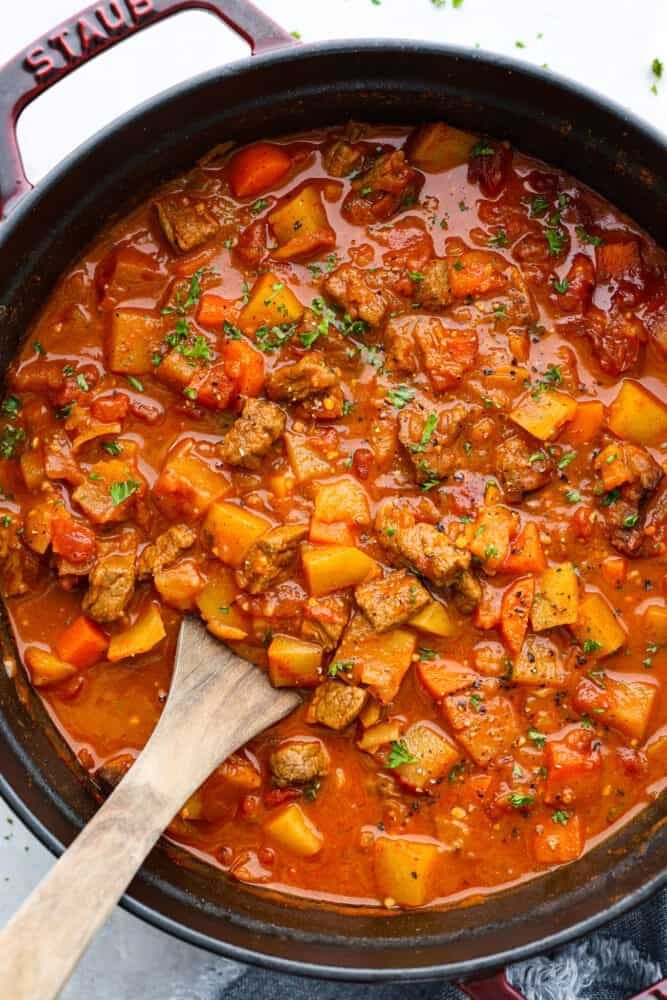
Of course! Here is a full, detailed recipe write-up for a beloved Polish dish from your aunt, presented as a classic Bigos (Hunter’s Stew). It’s a perfect candidate for a household favorite with deep history and robust flavor.
Bigos (Polish Hunter’s Stew): A Taste of Heritage
Introduction
Bigos (pronounced BEE-gohs) is more than just a stew; it is the national dish of Poland, a hearty, slow-cooked melody of meat, sausage, and sauerkraut that embodies the soul of Polish cuisine. Known as “Hunter’s Stew,” it traditionally combined foraged forest mushrooms and various game meats. Each family boasts its own version, passed down through generations. My Polish aunt taught me her cherished recipe, a beautiful balance of tangy, smoky, sweet, and savory flavors that mellows and improves over time. It’s the ultimate comfort food for cold days and a centerpiece for family gatherings.
Ingredients
For the Meat Base:
· 500 g (1.1 lbs) pork shoulder or stewing pork, cut into 1-inch cubes
· 300 g (10.5 oz) kielbasa (Polish sausage), sliced
· 200 g (7 oz) smoked bacon, diced
· 1 large onion, finely chopped
· 2 tbsp butter or lard
The Bigos Core:
· 800 g (28 oz) sauerkraut, rinsed and drained (if very sour)
· 400 g (14 oz) fresh white cabbage, shredded
· 200 g (7 oz) mixed wild mushrooms (or shiitake/cremini), dried or fresh, sliced
· 1 cup dried prunes, pitted and halved
· 2-3 bay leaves
· 5-6 allspice berries
· 1 tsp caraway seeds (optional)
· 2 tbsp tomato paste
· 1 tbsp Polish plum jam (powidła) or a tablespoon of honey
· 1.5 liters (6 cups) rich beef or vegetable broth
· 1 glass (125ml) dry red wine (optional but recommended)
Seasoning:
· Salt and freshly ground black pepper
· 1 tsp sweet paprika
· Marjoram, to taste
For Serving:
· Rye bread or boiled potatoes
· A dollop of sour cream
· Fresh parsley, chopped
Instructions & Method
- Preparation:
· If using dried mushrooms, cover them with hot water and soak for 30 minutes. Drain, reserving the liquid, and slice.
· Rinse the sauerkraut lightly under cold water if it’s very sharp, then squeeze out excess moisture.
· Prepare all meats and chop vegetables.
- Brown the Meats:
· In a large, heavy-bottomed pot or Dutch oven, melt the butter/lard over medium-high heat.
· Brown the pork cubes in batches until golden on all sides. Remove and set aside.
· In the same pot, fry the bacon until it releases its fat, then add the chopped onion. Sauté until translucent.
· Add the sliced kielbasa and fry for another 3-4 minutes until lightly browned.
- Build the Stew:
· Return the browned pork to the pot. Add the shredded fresh cabbage and cook for 5-7 minutes until it begins to wilt.
· Stir in the sauerkraut, sliced mushrooms, tomato paste, plum jam/honey, paprika, bay leaves, allspice, and caraway.
· Pour in the broth, red wine, and the reserved mushroom soaking liquid (avoiding the sediment at the bottom). The liquid should almost cover the ingredients.
- The Long Simmer:
· Bring to a boil, then reduce the heat to low. Cover and simmer gently for at least 2 hours, stirring occasionally.
· After 2 hours, add the dried prunes and a generous pinch of marjoram. Season with salt and pepper.
· Continue to simmer, uncovered now if it seems too liquid, for another 30-60 minutes. The ideal consistency is thick and hearty, not soupy.
- The Secret: Rest and Reheat
· Bigos tastes best made a day ahead. Let it cool and refrigerate overnight. The flavors marry and deepen magnificently.
· Reheat gently on the stovetop before serving, adding a splash of water if needed.
History & Formation
Bigos has its roots in the medieval Polish-Lithuanian Commonwealth. It was originally a dish for hunters (bigos comes from a German word meaning “chopped mixture”). Hunters would bring their catch—venison, boar, rabbit—and cook it with preserved cabbage (sauerkraut) and wild mushrooms over a campfire. Over centuries, it evolved into a “catch-all” dish, where leftover meats and seasonal ingredients were used. The addition of prunes, apple, or jam is a nod to the Polish love for sweet-and-sour flavors. Its formation is forgiving, which is why every family, region, and season has its own variation.
Nutrition & Benefits
Bigos is a nutrient-dense, high-protein dish. The sauerkraut provides probiotics beneficial for gut health, along with Vitamin C and K. The variety of meats offer protein, iron, and B vitamins. Cabbage is rich in fiber and antioxidants. Using leaner cuts of pork and moderating the bacon can make it healthier. While it’s a hearty dish, its balanced acidity from the sauerkraut makes it surprisingly digestible.
For the Bigos Lovers
True Bigos lovers know:
· It’s a dish of patience. The longer it cooks and the more times it’s reheated, the better it gets.
· It’s traditionally served from a large pot in the middle of the table.
· It pairs perfectly with a cold Polish beer, a glass of dry red wine, or a shot of icy vodka.
· It freezes exceptionally well, making it perfect for preparing in large batches.
Conclusion
My aunt’s Bigos is more than a recipe; it’s an edible heirloom. It fills the house with an irresistible, comforting aroma that promises a deeply satisfying meal. This stew tells a story of resilience, hospitality, and the Polish knack for creating extraordinary flavor from simple, humble ingredients. It’s a celebration on a plate, meant to be shared with loved ones over laughter and stories. Once you make it, it will undoubtedly earn its place as a treasured household favorite in your home, too.
Smacznego! (Enjoy your meal!)