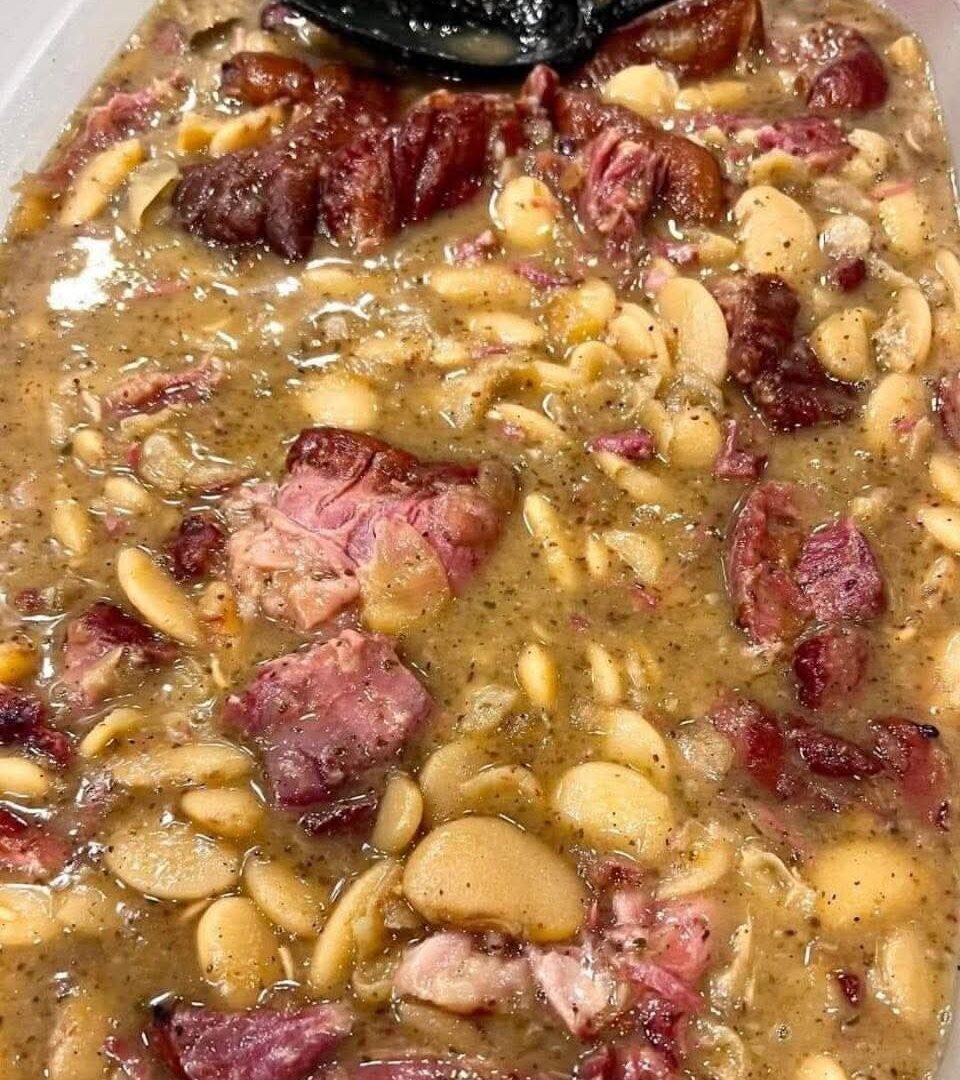
🫘 A Pot of Love: The Ultimate Beans and Ham Hock Recipe
Introduction
This isn’t just food—it’s a meal that stretches, satisfies, and brings everyone to the table. Beans with ham hock is more than a recipe; it’s a culinary tradition steeped in history, nourishment, and community. From Southern porches to Appalachian kitchens, from European farmhouses to Latin American cocinas, this humble combination has sustained generations. The magic lies in transformation: tough cuts, dry legumes, and hours of gentle heat become something profoundly comforting and deeply flavorful.
A Brief History: From Survival to Soul Food
The practice of cooking beans with smoked pork dates back centuries across multiple continents. In the American South, enslaved Africans transformed the available ingredients—often the less desirable cuts of meat given to them—into nourishing, flavorful dishes that became cornerstones of soul food. In Europe, similar combinations (like the French cassoulet or Italian fagioli con cotiche) emerged from peasant cooking, where nothing was wasted. The ham hock—the joint connecting a pig’s foot to its leg—is rich with collagen, which slowly renders into the beans, creating luxurious broth and tender meat. This dish represents resilience, creativity, and the universal human impulse to make something beautiful from simple provisions.
The Lovers: Who Cherishes This Dish?
· The Home Cook: Seeking comfort and practicality.
· The History Enthusiast: Connecting to culinary heritage.
· The Budget-Conscious Family: Needing meals that stretch.
· The Slow Food Advocate: Appreciating traditional, patient cooking.
· The Community Feeder: Hosting gatherings big and small.
🍖 The Ultimate Pot of Beans and Ham Hock
Ingredients
The Foundation:
· 1 lb (about 2.5 cups) dried beans (Great Northern, Navy, Pinto, or Camellia-brand red kidney beans)
· 1 large meaty smoked ham hock (about 1.5-2 lbs)
· 8 cups cold water or low-sodium chicken broth
· 2 bay leaves
The Aromatics (The “Holy Trinity” of flavor):
· 1 large yellow onion, diced
· 1 large green bell pepper, diced
· 2-3 celery ribs, diced
· 4-5 cloves garlic, minced
The Flavor Builders:
· 2 tablespoons olive oil or rendered bacon fat
· 1 teaspoon dried thyme
· 1 teaspoon smoked paprika
· ⁄2 teaspoon cayenne pepper (or to taste)
· 1 tablespoon tomato paste
· Salt and freshly ground black pepper to taste (ADD SALT AFTER COOKING, see method)
The Finish (Optional but recommended):
· 2 tablespoons apple cider vinegar or fresh lemon juice
· ⁄4 cup fresh parsley, chopped
· Green onions, sliced, for garnish
Nutritional Profile (Per Serving, approx. 1.5 cups):
· Calories: ~350-400
· Protein: 22g (Excellent source, complete when paired with grain)
· Fiber: 15g (Over half the daily recommended intake)
· Key Vitamins/Minerals: High in Iron, Folate, Magnesium, Potassium, and Zinc.
🥘 Methods & Step-by-Step Instructions
Method 1: The Traditional Stovetop Simmer
- Prepare the Beans:
Sort through beans, removing any stones or debris. Rinse thoroughly. For best results and to reduce compounds that cause digestive discomfort, soak using either method:
· Quick Soak: Cover beans with 2 inches of water in a large pot. Bring to a boil for 2 minutes, then remove from heat, cover, and let stand for 1 hour. Drain and rinse.
· Overnight Soak: Cover beans with cold water and let sit at room temperature for 8-12 hours. Drain and rinse.
- Sear and Sauté:
In a large, heavy-bottomed Dutch oven, heat oil or fat over medium-high. Pat the ham hock dry and sear on all sides until lightly browned, about 3-4 minutes per side. Remove and set aside. In the same pot, add the onion, bell pepper, and celery. Cook until softened, 6-8 minutes. Add garlic, thyme, paprika, and cayenne, cooking until fragrant (1 minute). Stir in tomato paste. - Simmer to Perfection:
Add the drained beans, seared ham hock, bay leaves, and 8 cups of cold water or broth. Liquid should cover everything by about an inch. DO NOT ADD SALT YET, as it can toughen the beans early in cooking.
Bring to a boil, then immediately reduce heat to the lowest possible simmer. Cover partially and cook for 1.5 to 2.5 hours. Low and slow is key. The beans should be creamy and tender, and the meat should be falling off the bone. - Finalize and Serve:
Carefully remove the ham hock and bay leaves. Let the hock cool slightly, then shred all the meat, discarding skin, fat, and bone. Return the meat to the pot.
Now, season with salt and pepper. Stir in the apple cider vinegar or lemon juice—this brightens the entire dish. Let it simmer, uncovered, for 15 more minutes to meld flavors. The broth will thicken slightly.
Remove from heat, stir in fresh parsley, and garnish with green onions.
Method 2: The “Set It and Forget It” Slow Cooker
Follow steps for soaking beans and sautéing aromatics (this step is crucial for flavor). Transfer soaked beans, sautéed veggies, ham hock, bay leaves, and broth/water to a 6-quart slow cooker. Cook on LOW for 8-10 hours or HIGH for 5-6 hours. Proceed with Step 4 (Finalize and Serve).
Method 3: The Modern Pressure Cooker/Instant Pot
Using the sauté function, sear ham hock and sauté aromatics as in Step 2. Add soaked or UNSOAKED beans (see manual for liquid adjustments), bay leaves, and enough water/broth to cover by 1 inch. Pressure cook on HIGH for 45-60 minutes (soaked) or 75-90 minutes (unsoaked) with natural pressure release. Proceed with Step 4.
✨ Tips to Take This Recipe to the Next Level (👇)
- The Bean Choice Matters: Heirloom varieties like Camellia brand or Rancho Gordo have superior flavor and texture.
- Layer Your Smokiness: Add a teaspoon of liquid smoke or a small piece of guanciale or smoked turkey wing for deeper complexity.
- The Acid is Non-Negotiable: The splash of vinegar or lemon juice at the end isn’t optional—it lifts the rich, fatty flavors and makes the